
Checking for a Warrant in New Orleans
Every warrant check in New Orleans starts with the court that issued the order, since each one keeps its own file. Tickets and ordinance cases sit with the Municipal and Traffic Court. Criminal charges sit with the Criminal District Court.
- Read the notice and decide which court issued it.
- Search the city court case list for a ticket matter.
- Use Clerk Connect for a criminal docket.
- Ask the clerk for the current order on the case.
- Talk to a Louisiana lawyer before you appear or pay.
A missed traffic date in New Orleans carries more than a fine. An Orleans Parish traffic warrant search covers the license side of it.
One New Orleans Warrant System, Several Courts
The State of Louisiana lists just one city for Orleans Parish, and that is why a single New Orleans page covers the entire parish. City and parish share a border and a courthouse list. A resident can move between those record systems without ever leaving town.
The state's Orleans Parish profile names New Orleans the parish seat.
NOPD Records Route for New Orleans Warrants
The New Orleans Police Department keeps headquarters and records under one Poydras Street roof. Its Records and Identification Division sits on the fifth floor.
NOPD Headquarters
1615 Poydras Street, New Orleans, LA 70112
504-821-2222
Records and documents line: 504-658-5455
Records window weekdays, 9:00 a.m. to 2:45 p.m.
Police records and warrant records come from different shelves. A police report shows what an officer did. A warrant file shows what a judge ordered. Public records requests in New Orleans go through the city's NextRequest portal, and the department's policy index names its warrant chapters.
New Orleans Police and Municipal Court
New Orleans splits its cases between two public offices. The police department makes arrests and writes the reports. The Municipal and Traffic Court hears the ordinance and traffic cases that follow, plus first appearances and records work. Its clerk is Christopher P. Sens, and its listed administrative judge is Robert E. Jones III. The New Orleans Marshal's Office provides security and carries out court orders. A court order and a police report remain different documents.
Note: Court names and official roles come from the agencies' own pages and can change after an election or transfer.
New Orleans Has No NCIC Warrant Search
No public name search taps the national crime database, and New Orleans offers no city version of one. When an officer runs a warrant, the police department verifies it through its own terminal. That check stays internal, and the public cannot run it. The department's written policy says officers verify warrants through the internal system and spells out how out-of-parish matters are handled. For a resident, the court file remains the public route.
New Orleans Warrant Types
Four kinds of orders turn up in New Orleans cases, and the type decides which office to call. The label on the paper is the one that matters.
| Type | Where it starts | Who holds the record |
|---|---|---|
| Traffic or municipal attachment | A missed ticket or ordinance date | Municipal and Traffic Court |
| Arrest warrant | A sworn affidavit and probable cause | Criminal District Court |
| Bench warrant | A missed criminal court date | The judge on the case |
| Juvenile warrant | A missed delinquency appearance | Juvenile Court, under confidentiality rules |
A federal warrant is a fifth possibility, and it belongs to the federal court.
Note: The label on the paperwork decides which court holds the file, so start there.
What New Orleans Warrant Grids Leave Out
The New Orleans city court's case grid is useful, and easy to overread. A row lists the case number, division, violation date, defendant, date of birth, violations, next action date, and case status. What is missing matters as much. There is no warrant column and no bond column, so a case status is not a warrant status. Cases filed before 2002 do not appear online, and those readers must call. A blank result proves only that the case is not in that system.
Note: The division on a case is the office that can answer questions about it, so write it down.
Inside a New Orleans Warrant Record
The public file for a New Orleans city case is short. A screen shows less than the file itself.
| Case Number | The identifier for the case. |
|---|---|
| Division | The division that hears the case. |
| Violations | The charges or ordinance counts on the case. |
| Case Status | Where the case stands, in general terms. |
| Not shown | Bond, issuing judge, and any attachment detail. Ask the clerk. |
Ask for the current order, its conditions, and the document to bring next time.
New Orleans Warrant Clerk After Act 15
The office that kept the parish's criminal case books changed in 2026. Act 15 abolished the separate clerk of the Criminal District Court at the end of May 3, 2026 and moved its records and functions to the Clerk of Court for the Parish of Orleans. Legacy clerk pages, forms, and room numbers still circulate, so a reader can land at a counter that no longer handles the request. New Orleans callers should confirm the office before visiting. The successor clerk lists its public contact at 421 Loyola Avenue, Room 402, with weekday hours and a records email address. The older criminal clerk material points to a Tulane Avenue suite instead.
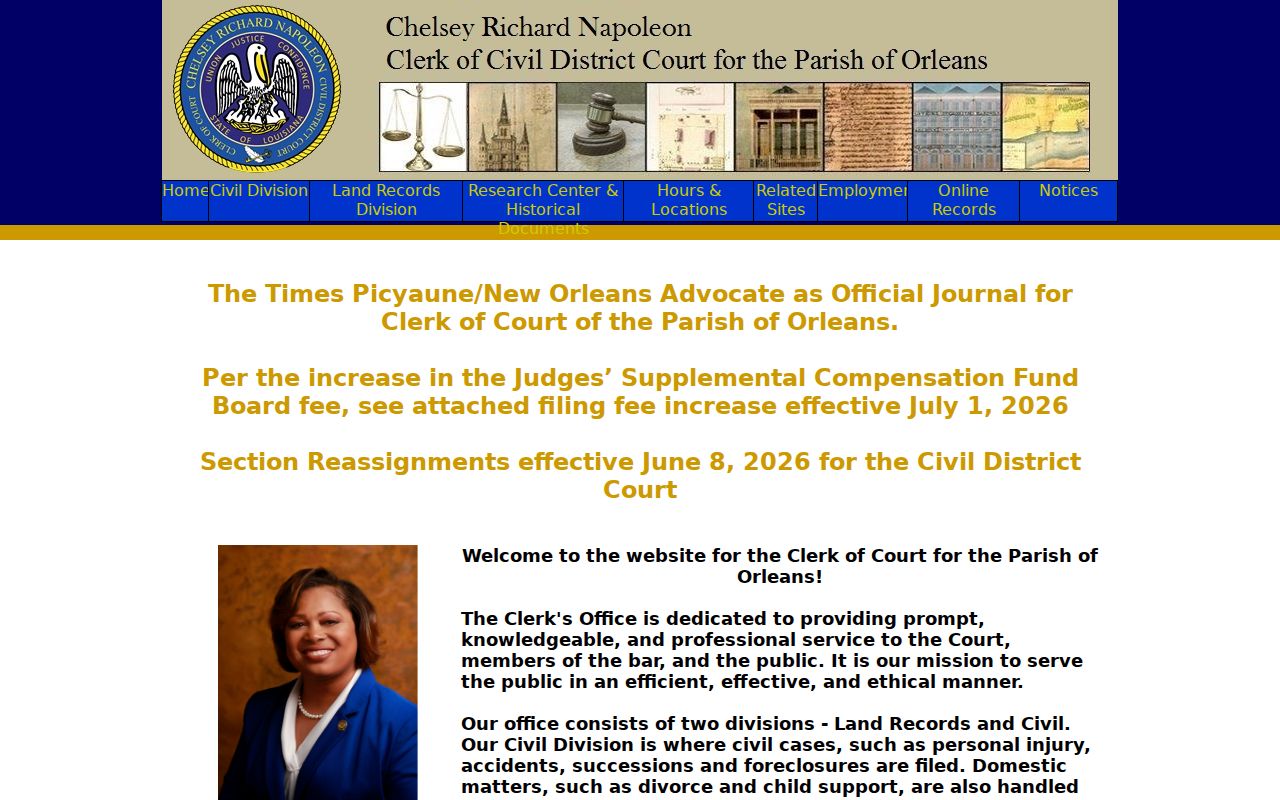
Confirm which counter is active before you travel.
How New Orleans Warrants Fit the County System
City cases sit inside the wider Orleans Parish system. The Criminal District Court hears felony and misdemeanor matters in twelve sections plus Magistrate Court. The New Orleans city court handles ordinance and traffic matters of its own, and each keeps its own records. That split is why a warrant check often takes more than one stop. The Orleans Parish warrant records overview maps the full county picture, including the sheriff's role and the records laws that apply.
New Orleans Juvenile Warrant Records
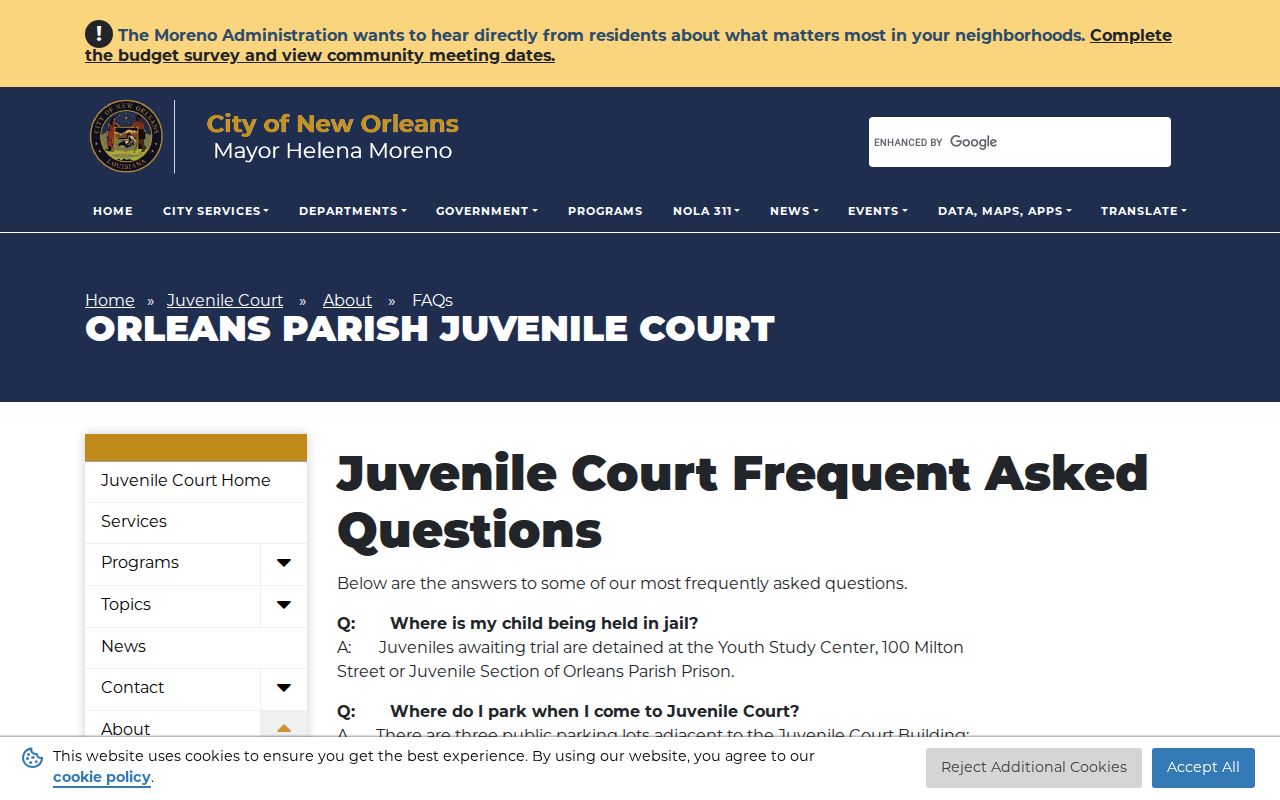
Delinquency cases in New Orleans go to the Orleans Parish Juvenile Court. The court's own guidance says a failure to appear can lead to a warrant for immediate arrest. A contempt fine can stay in place until the court recalls it. That is process, not a search method. The court's contact page lists its Milton Street location and its weekday hours.
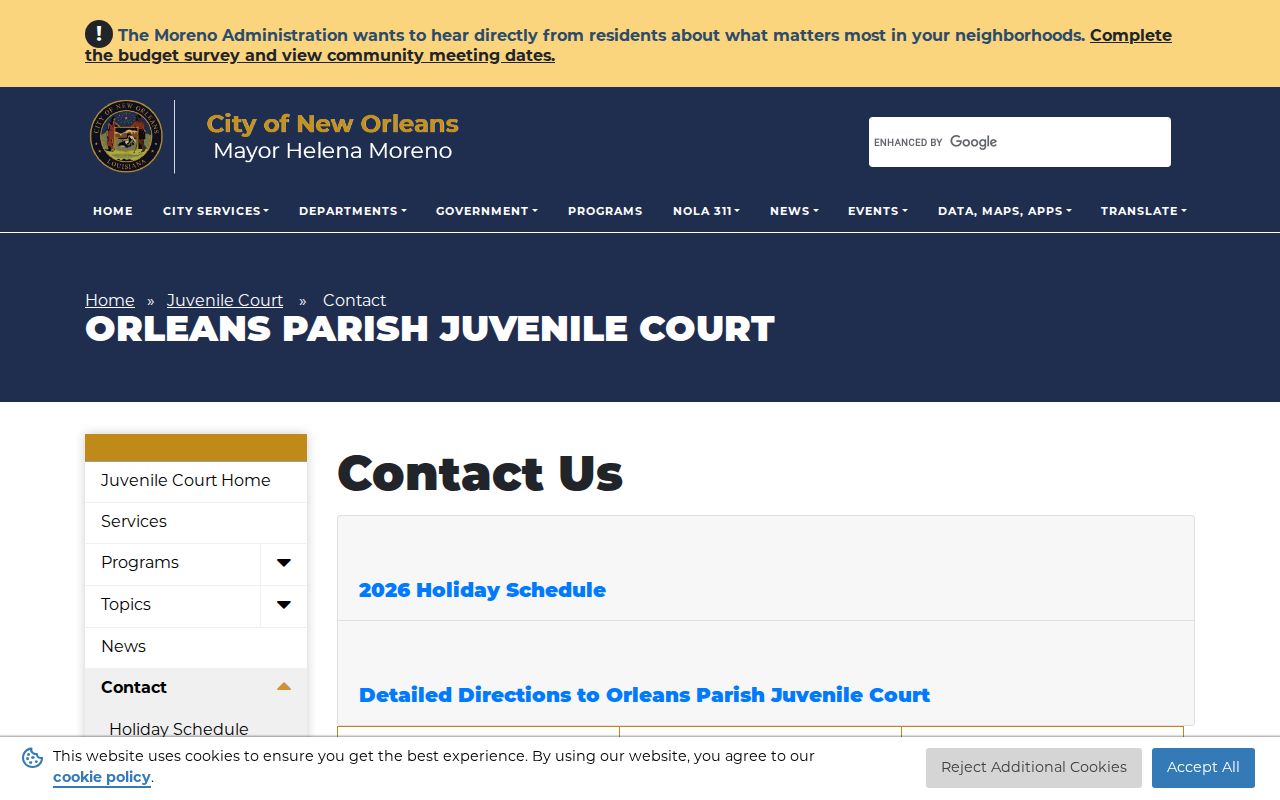
Call that office or an attorney with a case-specific question. The court's FAQ explains the failure-to-appear consequence in its own words.
State law keeps juvenile files confidential in New Orleans. No public search returns a child's name.
New Orleans Warrant Records and Public Access
Public records law in La. R.S. 44:32 puts the burden on the office holding a record to produce it. That principle reaches every New Orleans agency you might petition for warrant records. Some files stay closed, though. La. R.S. 44:3 permits withholding certain material, active investigative work among it. If an office refuses or simply ignores a request, La. R.S. 44:35 lets the requester go to court for a remedy. Two other limits come up often in New Orleans. Juvenile records are confidential under the Children's Code. A sealed file stays out of public view, so ask the court what it can release before assuming anything is missing.